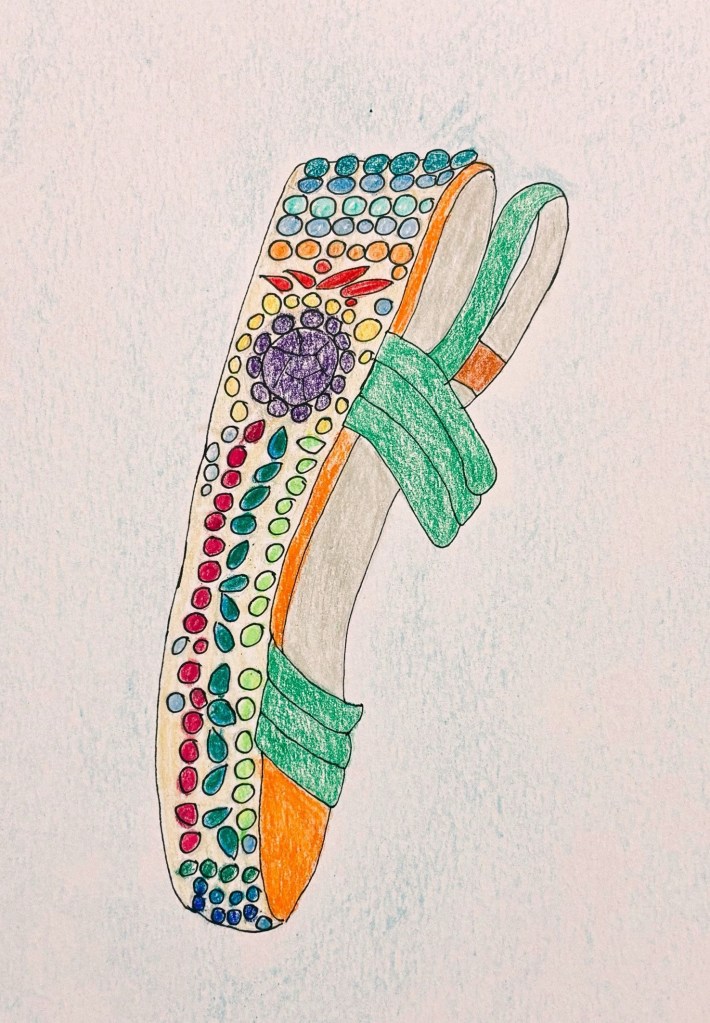
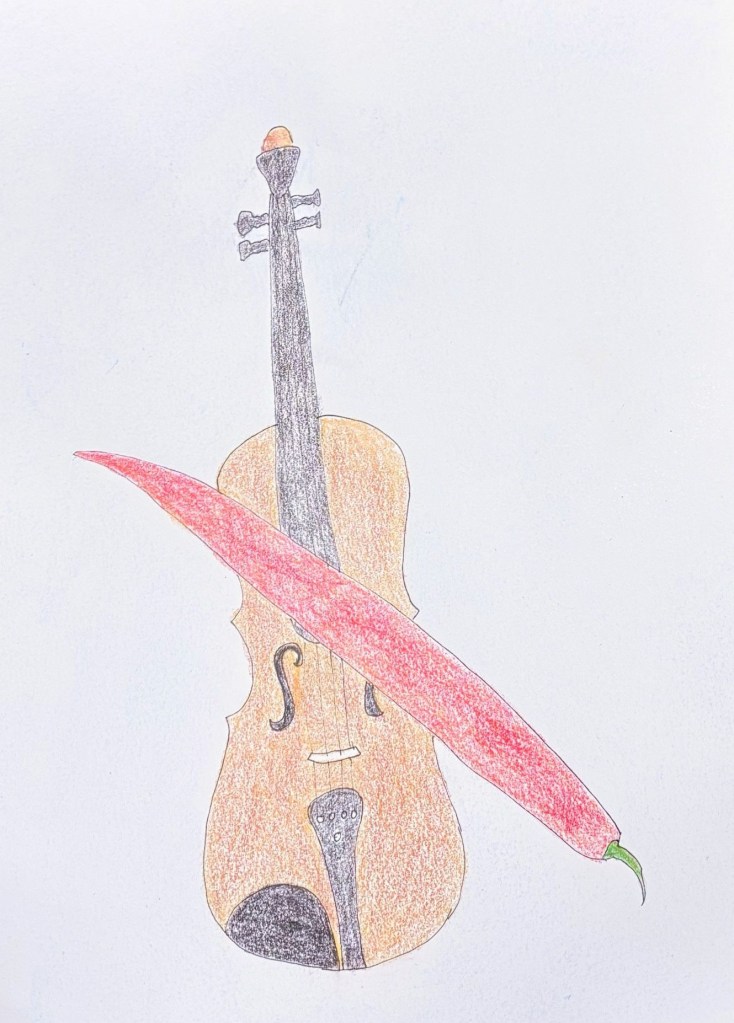
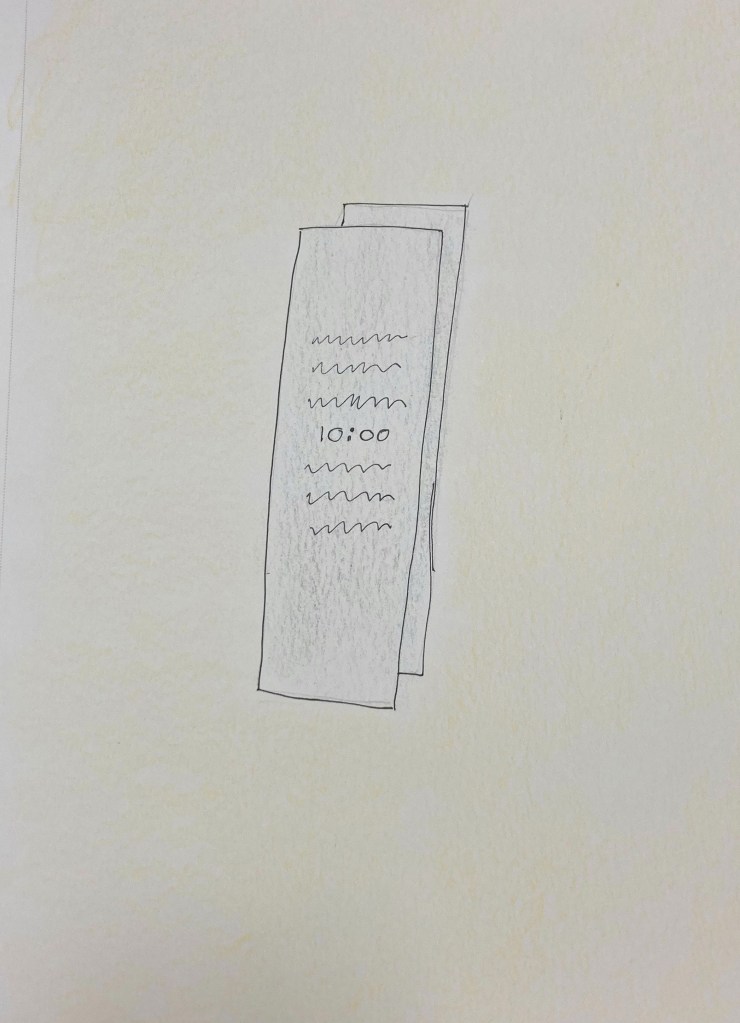
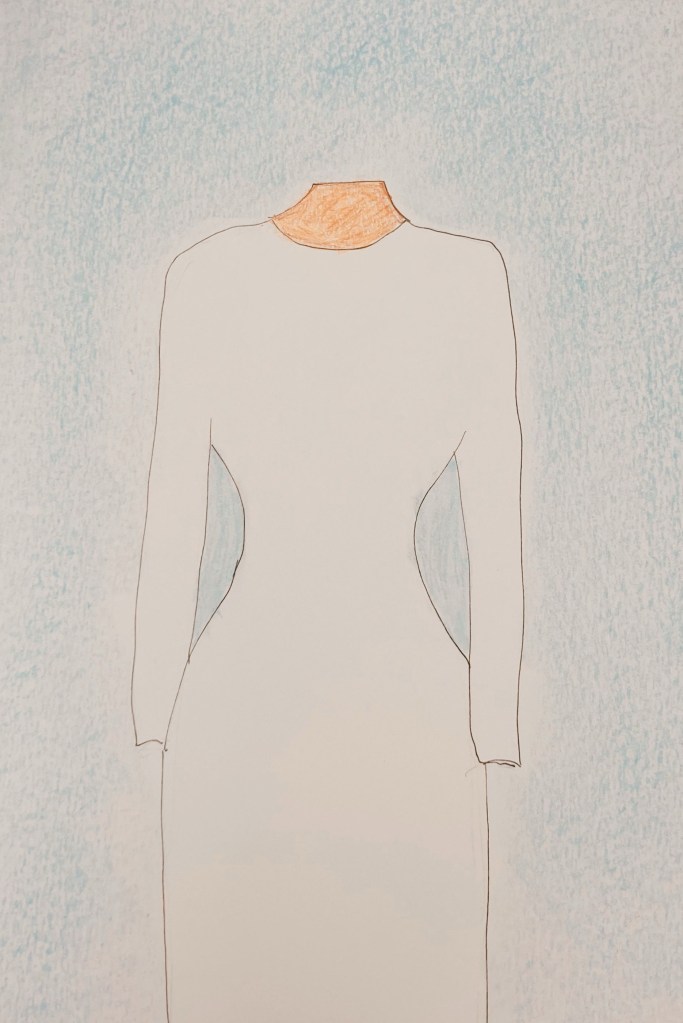
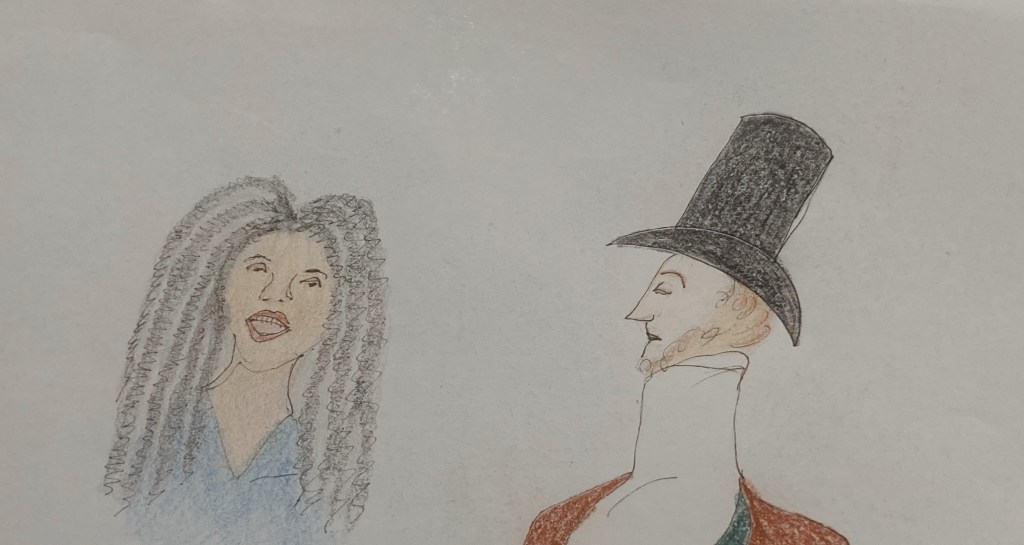
As usual, Goddess Kring is out and about causing lots of items to be bedazzled and lots of us with $20 available for the ticket price to select her show as the available venue.
Plus wine, of course, which is where places like Seattle Open Arts Place make an unfortunate amount of their money.
Being always known, she can get the talent out, and that is where some parts of the two-hour show were an absolute wow and some only so-so. It’s a crap shoot in absolute terms, but the wisdom of the crowd here prevails.
Los Norteños Writers Group has taken to advertising Latino-friendly arts events on their Facebook feed. This caught my eye.
My grandmother had a childhood filled with mandatory piano lessons in a tiny house in the cedars heated by a wood stove across the Sound from Seattle. She and her two siblings formed a swing trio in the late 1930s that played in dances all over the Olympic peninsula.
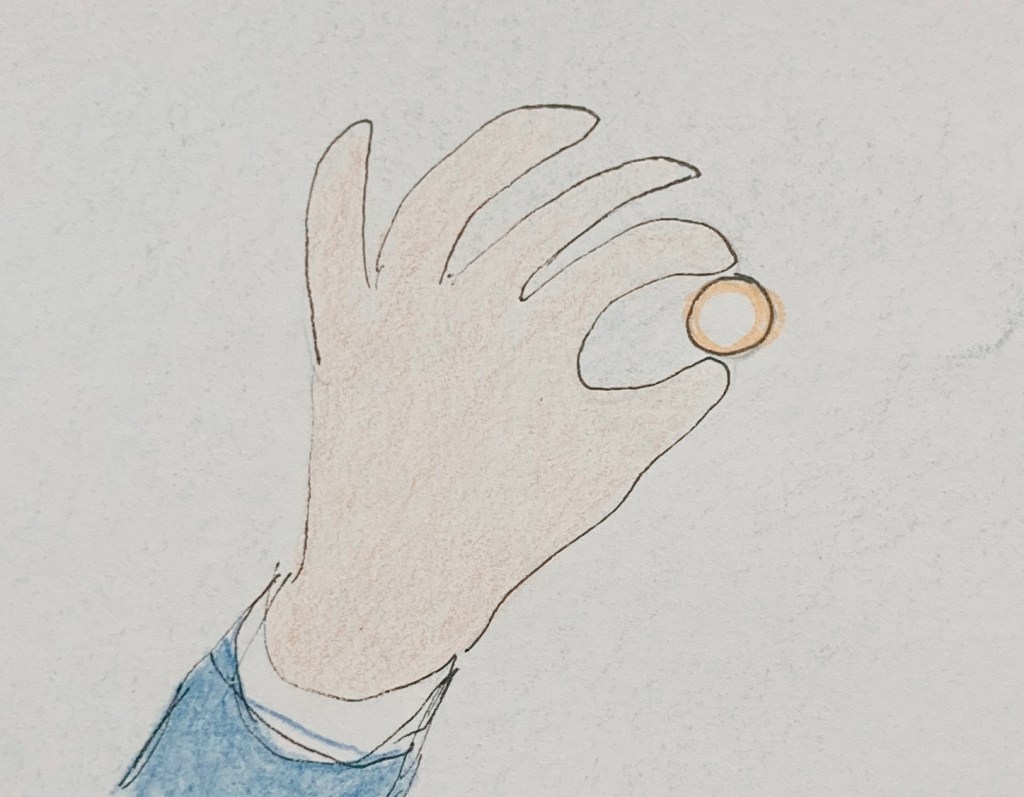
As an adult, she couldn’t afford a piano, and often didn’t have room for one, but did keep a second-hand Lowry organ that she paid $1,800 for in the 1960s by working as a secretary and saving up for it. It was one of the two fineries in that otherwise very frugal house, the other being her gorgeous wedding ring.
So we kids were scolded into music from the time we could be sat down at the organ and taught “Silent Night.”
Being Latino, my father was not in favor of me training in Anglo classical music if it meant buying a piano for a child with no track record of practicing, but he did entertain the idea of the classical guitar. My first teacher, George Llanes, was located by having a sign in his apartment window on the major Houston thoroughfare Lawndale Street that read “Guitar Lessons.” When he was discovered to be a Latino, my father was pleased and laid out the funds for the lessons. The family later moved to a rural area, and I did not bond with the new guitar teacher, who wasn’t that interested in the Spanish classical repertoire but in country music, which didn’t set me on fire, so I laid it aside until better arrangements could be made.
In my twenties, after finishing college and the early years of the first jobs, I paid for classical guitar lessons myself, and spent a few years with that before turning to opera, evolving into a playwright and opera librettist, eventually writing several pieces that were produced by some formidable opera companies, including the Seattle Opera Young Artists Program.
So it was with delight that I found Orquesta Northwest and have sworn to become a devotee and supporter.
The two-hour program had the quality of being somewhere between a classical garage band and jonesing for a tour, all the while developing the audience into turning up next time and telling their friends.
While there was one Mozart piece played in memoriam of the local Latino classical musician Rafael Howell-Flores, almost the entirety of the program was of Latino composition, and comprised composers I have encountered piecemeal over the years, like Carlos Gardel, Astor Piazzolla, and Manuel Ponce. The inclusion of Mesoamerican-influenced folk music adapted for classical instruments was a welcome aspect of the program.
The event was “Pay What You Can,” so there is no real impediment for anyone to show up. Come one, come all, and maybe the group will someday attract a classical guitarist to play those inimitable gems of Latino art music.
I was looking forward to expanding my recent theatre viewing repertoire to the theatre sports production 14/48.
Some of you may know that 14/48 is a stunt somewhere between IMPROV — I FORGOT MY LINES — and WHAT LINES? A few playwrights are matched with actors, given a theme, and expected to stay up all night writing and rehearsing a short play, which goes up on caffeine and adrenaline the next two nights.
In experienced hands, it never palls, by the grace of the tricks of the trade. And that is fun.
I work Saturdays, so, just to be certain, I booked the late show, 10:00 p.m.
The company I produce with, DAMN (Dramatists and Actors Meeting Now), also secures space through Theatre Puget Sound at the Armory for our semi-annual productions, so I thought it would be a breeze.
Little did I know that 14/48 did not make any reasonable arrangements for the fact that the Armory building at Seattle Center closes at 9 p.m. Period.
Nobody shows up at 8:30 for a 10:00 show. It just isn’t done — what are you going to do for that hour and a half? Sit there and drink boxed wine?
I suspect the point of having the late show was to hark back to everyone’s days doing late night theatre on Capitol Hill. We all lived on the Hill, so we walked. The theatre was open if we said it was open. It was raucous and fun, with minimal production values in an old garage or something. Sadly, it is now developed and very expensive. The sites at the Armory are partly subsidized by the City, but the City has Rules, and one of them is, No Staying Out Late.
We are not on Capitol Hill. We are on Queen Anne Hill, and we are expected to pull into bourgeois norms.
I showed up at ten minutes to curtain time, a normal thing for anyone.
The Security Guard waiting at the locked door shook his head and told me to go around the building. I did, checking every entrance. They were all locked. On the third entrance, I found two other theatregoers who were looking for the Center Stage at 305 Harrison, the Armory, for the show. We all stood there wondering if everyone had forgotten about us.
Evidently they had.
One of my old friends, a director/producer, used to say, “Organization is the key to entertainment.”
I got no response from the company 14/48 about the three patrons who were locked out at 9:50 — and no refund for my ticket price. The company’s web site the next day had no mention of the Armory closing at 9, but did have tickets available at 10.
Mendacity!
Did they tell the new patrons about the Armory situation or did they just expect everyone to KNOW?
What was to be done but head over to the Pineapple Bar for tropical drinks?
UPDATE: Tuesday Megan Ahiers of14/48 contacted me to say that they would have better communication next time and that she would refund me my ticket price. I am content and will patronize the theatre again.
There was a lot to like about “Wish You Were Here” by Pulitzer-Prize-winning playwright Sanaz Toossi.
The Iranian Islamic Revolution is a subject that most American audiences are unfamiliar with, so it was fresh. Six upper-middle-class Iranian women and their lives before, during, and after the Islamic Revolution, one of whom was Jewish. The action spanned about thirty years and saw the resolution of events that, at the start, the characters felt would be transitory, and ended up being permanent. To this day, the government of Iran is an Islamic Republic and not a secular one.
“Wish You Were Here” has a first play feel. It is a wild upsurge of primal creativity in the Bildungsroman genre, the story of the author’s Coming of Age. Because it is so primal, it is also messy, both in its ideas and the dramaturgical execution. But the work of art is so charming and the talent of the budding playwright so immense that the audience is willing to overlook the minor pecadillos and sit in pleased admiration at the birth of what we hope will be a major new voice. For that reason, Thumbs Up!
The first speculative trading bubble in history occurred from 1634 to 1637 in the Dutch Golden Age, in which the trading of tulip bulbs reached enormous heights, then precipitously collapsed.
Charles Mackay, in The Madness of Crowds, recounts the anecdote of a sailor who mistook a particularly valuable bulb for an onion and ate it. According to Mackay, the sailor was found “eating a breakfast whose cost might have regaled a whole ship’s crew for a twelvemonth.”
November’s show, “It’s about Damn Time,” had a piece in it called “Porn Dogs,” with Chris Mathews, Bridgette Elizabeth Moody, and Thomas Michael Whyte III, written by Mathews.
It was sheer perfection for what it was. I sat there gasping, and said to myself at the end, They’re having a Pulp Fiction moment.
Generative art is not one unending stretch of greatness. Like waves in the sea, where three or four small waves are followed by a large wave, there are highs and lows in the artistic caliber of the pieces.
That is, if you don’t sell out artistically. My friend Andrew Golla used to say that a lot of in-demand directors had a gimmick. Let’s say the gimmick was a parachute. In every production, they would figure out a way to involve a parachute in the set, and when theatres were casting about for a director, they’d say, “Hey, let’s get the parachute guy!” And in he would come, with the same old thing that worked before, but wasn’t really fantastic all the time.
So here we are with this group, DAMN (Dramatists and Actors Meeting Now), that I have only barely started to get to know, and am starting to produce with, even if I am sure that Chris Mathews and I were producing at the same fringe festivals thirty years ago, but not in the same room! So we never met, because I ended up going in lots of different directions and doing theatre in other cities, and it is only just now that I am finding him and his company.
So I was frankly skeptical that they would be able to top that last piece. Like Pulp Fiction, it was such a perfect concatenation of artistic themes, ripeness, casting, and The Right Play somehow, that we must humbly say, Okay. I will not dare to hope for that again.
For another four plays.
But Mathews has impressed me. One Ton o’ Fun was not . . . exactly . . . Porn Dogs, but it was a wise, light touch of meta-theatre, and it really pulled the room together.
Sunday mid-morning. I have just completed my first “write,” and am now casting about for some way down.
I’ve had Raul’s e-reading tabbed on Facebook for some time. It looks like that time is today.
You know you’ve made it in Latinx Seattle when an Alfredo Arreguín painting is associated with your work. I doubt I will ever have such an honor, but what’s not to like about coyotes?
Raul and I have been friends since the mid-90s when we were both in the Seattle Latinx writers group Los Norteños. It has been a pleasure following his art and his career as a poet and, more recently, Poet Laureate of the City of Redmond (2019-2021). He manages and stocks a poetry box in North Seattle and a Thursday midday poetry reading in the park.
The idea that there is justice in the world resonates through my entire being when I marvel at the through-line of his accomplishments.
A poetry reading is not an easy art. To hold an audience accustomed to rapid-fire visual stimulation in rapt attention for an hour with only the spoken word takes considerable practice and expertise. Thus this particular event is a superb example of the entertainment genre poetry reading.
Fellow reader C. W. Emerson rounds out the event with a polished set of pieces featuring lyric descriptions of his life in the heyday of gay San Francisco, the era we old timers remember, the real A.I.D.S. epidemic that is probably playing out in poorer parts of town even now. Those of us in the arts all lost friends to it.
Willem Beukelszoon discovered a method of preserving herring that involved gutting the fish but leaving part of the stomach and internal organs — “pyloric caecae” — intact. These organs would continue to emit an enzyme called trypsin, enabling the fish to be preserved in brine for up to two years. This method was superb in that vessels could pickle the herring at sea, enabling sailors to endure longer trading voyages. It was so pivotal a discovery that the Dutch came to dominate the salt herring trade for centuries, giving the Christians something to eat on Fridays and fast days. Even today, pickled herring eaten in a single gulp from head to tail is a celebrated dish in that nation.
How fortunate it is that someone figured out how to put salt on a fish in a boat.
This important event is celebrated in a church window. (Republic of Amsterdam Radio.)